Inflatable Games for Sale for Schools, Resorts, and Family Entertainment Centers
Inflatable games have become valuable additions to recreational spaces because they combine physical activity, interactive entertainment, and social engagement. Schools use them for activity days and special celebrations, resorts introduce them to enhance guest experiences, and family entertainment centers incorporate them into their attractions to encourage repeat visits.
With a wide range of designs available, choosing the right equipment requires an understanding of the venue, target audience, available space, and expected frequency of use. Exploring Inflatable Games for Sale can help organizations discover suitable options for different recreational environments.
Whether the goal is to organize a school carnival, improve resort entertainment, or expand a family entertainment center, the right inflatable games can create engaging experiences when selected and operated responsibly.
Why Inflatable Games Are Popular in Commercial and Recreational Venues
Inflatable games offer several advantages for organizations looking to provide interactive activities. Unlike passive entertainment, these attractions encourage participants to move, compete, cooperate, and engage with others.
Their variety also makes them suitable for different age groups and event formats. Simple bounce houses may appeal to younger children, while obstacle courses and sports challenges can attract older participants.
Other reasons for their popularity include:
- Versatile entertainment: Different designs support recreational play, friendly competition, and group activities.
- Visual appeal: Bright colors and themed structures can make activity areas more inviting.
- Flexible event planning: Some inflatable games can be installed temporarily for special events.
- Multiple activity options: Venues can combine different games to provide a more varied experience.
- Potential business value: Commercial operators may use inflatable attractions to support ticketed activities, event packages, or rental services.
The suitability of any attraction depends on its construction, intended use, operating requirements, and the needs of the venue.
1. Inflatable Games for Schools
Schools frequently organize sports days, fundraisers, seasonal celebrations, welcome events, and end-of-term activities. Inflatable games can provide additional entertainment during these occasions while encouraging students to participate in structured recreational activities.
Popular Options for School Events
Different inflatable games can serve different purposes at school functions.
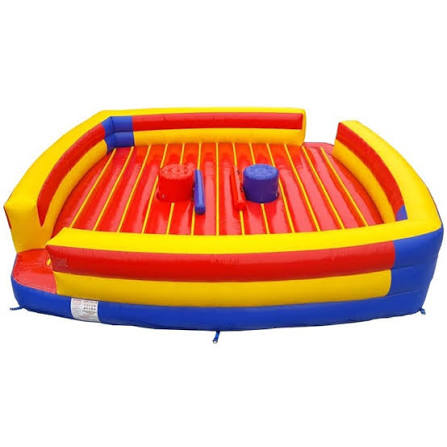
Inflatable obstacle courses: These attractions encourage students to navigate a sequence of challenges. They may be suitable for school carnivals, field days, and supervised group activities.
Bounce houses: Smaller bounce houses can provide recreational play for younger students when the design, capacity, and supervision arrangements are appropriate.
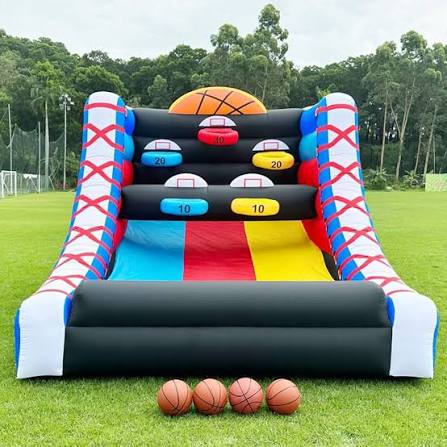
Inflatable sports games: Basketball challenges, soccer games, and target-based activities can introduce friendly competition and complement sports-themed events.
Interactive inflatable challenges: Games involving timed activities or simple objectives can keep students engaged and provide variety across activity stations.
When selecting products for a school, administrators should consider the students’ ages, physical abilities, event schedule, and the number of participants expected.
Important Considerations for Schools
Safety and supervision should guide purchasing decisions. Schools should confirm the manufacturer’s age recommendations, participant limits, anchoring instructions, and operating procedures before using an inflatable attraction.
The available space must also be measured carefully. Outdoor areas need suitable ground conditions and enough room for safe access and supervision, while indoor installations require adequate height and clearance.
Schools should establish procedures for staff supervision, participant queues, weather monitoring, and equipment inspections. Any attraction that does not meet the school’s requirements should not be used until the concerns have been resolved.
2. Inflatable Games for Resorts
Resorts often seek ways to improve guest satisfaction by providing recreational activities for families, groups, and children. Inflatable games can complement existing facilities such as swimming pools, playgrounds, sports courts, and outdoor event spaces.
Enhancing Family-Friendly Experiences
Family-oriented resorts may use inflatable slides, themed play structures, and interactive games to create dedicated recreation zones.
These attractions can be particularly useful during school holidays, family events, and seasonal entertainment programs. A combination of activities may help accommodate guests with different interests.
Resorts should choose products that fit their overall guest experience. For example, a property focused on family vacations may prefer colorful play structures, while a resort that hosts group retreats may benefit from competitive games and obstacle courses.
Temporary and Seasonal Entertainment
Some resorts may prefer temporary inflatable attractions for holiday periods, weekend events, or special celebrations. Temporary installations can offer variety without requiring a permanent change to the venue.
Before choosing this approach, management should consider transportation, setup labor, storage, weather exposure, and the availability of trained operators.
Seasonal equipment must be inspected before each period of use, and storage should follow the manufacturer’s recommendations.
Commercial Requirements for Resorts
Resorts may experience repeated use during busy periods, so durability and maintenance are important purchasing considerations.
Management should review construction specifications, cleaning procedures, warranty coverage, replacement part availability, and the manufacturer’s guidance for frequent operation.
If an inflatable game will be placed near a pool or other water feature, the resort should assess additional risks associated with wet surfaces, water access, and participant movement. A product should only be used in such an environment if the manufacturer permits that application and appropriate controls are in place.
3. Inflatable Games for Family Entertainment Centers
Family entertainment centers need attractions that can appeal to different customers while fitting the venue’s layout and operating model. Inflatable games can provide dedicated play areas, competitive activities, or supplementary attractions alongside existing entertainment options.
Interactive Games for Repeat Engagement
Interactive inflatable games may feature targets, timed challenges, head-to-head competitions, and sports-based activities. These formats give participants clear objectives and can encourage them to try again or compete with friends.
Obstacle courses can also provide a more active experience for visitors who prefer physical challenges.
For a family entertainment center, the best selection often depends on the age groups that visit most frequently, the available floor space, and the attraction’s expected operating schedule.
Space Planning and Visitor Flow
Indoor entertainment centers may have limited floor space, making dimensions a key purchasing factor.
Before ordering, measure the installation area and confirm the inflatable structure’s height, width, and length. Account for entry and exit points, required safety clearances, supervision positions, and access to emergency routes.
Management should also consider how the attraction will affect queues and movement through the venue. A well-planned layout can help visitors access the activity without creating unnecessary congestion.
Supporting Business Performance
Inflatable games may help entertainment centers broaden their activity offerings and create opportunities for special packages or group bookings.
However, operators should assess whether a proposed attraction is likely to justify its purchase and operating costs. Consider expected visitor demand, ticket pricing, staffing, maintenance, downtime, and the space required to operate the game.
The most expensive attraction is not automatically the most profitable. Equipment should be selected according to the venue’s audience, business strategy, and practical operating capacity.
4. Comparing Inflatable Games for Different Venues
Although schools, resorts, and family entertainment centers may use similar inflatable games, their priorities can differ considerably.
| Consideration | Schools | Resorts | Family entertainment centers |
|---|---|---|---|
| Primary purpose | Special events and student recreation | Guest entertainment and seasonal activities | Regular visitor engagement |
| Common options | Bounce houses, obstacle courses, sports games | Themed play structures, slides, interactive games | Obstacle courses, sports challenges, interactive attractions |
| Key priority | Age suitability and supervision | Guest experience and operational flexibility | Durability and efficient space use |
| Usage pattern | Often event-based | Seasonal or recurring | Potentially frequent or daily |
| Important planning factor | Student numbers and activity schedules | Weather, storage, and guest areas | Visitor flow, maintenance, and operating costs |
This comparison provides a general starting point rather than a fixed rule. Each organization should evaluate its own needs, site conditions, and safety requirements before purchasing equipment.
5. Features to Look for When Buying Inflatable Games
Regardless of the venue, several product features deserve careful attention.
Durable Materials
Ask the supplier about the fabric, coating, thickness, reinforcement, and construction methods used. PVC-coated fabrics and other specialized materials may be used depending on the product’s design and intended application.
For commercial use, confirm that the product is suitable for the expected frequency of inflation, deflation, transportation, and participant activity.
Quality Construction
Inspect seams, corners, attachment points, and other areas exposed to repeated stress. Request detailed photographs, technical specifications, or a sample inspection when practical.
Product appearance alone cannot establish durability, so ask the manufacturer about quality-control procedures and recommended operating conditions.
Appropriate Blowers and Accessories
Many inflatable games require a blower to maintain inflation. Verify that the included or recommended blower matches the product’s specifications.
Check whether anchoring equipment, storage bags, repair materials, and other necessary accessories are included in the quotation.
Safety Documentation
Ask for operating instructions, installation guidance, participant limits, maintenance recommendations, and relevant compliance documentation.
The applicable standards and documentation may differ according to the product, jurisdiction, and intended use. Buyers should verify local requirements rather than assume that every inflatable attraction follows identical rules.
Warranty and Technical Support
A clear warranty and accessible after-sales support can be valuable for organizations that depend on their equipment for scheduled activities.
Confirm what the warranty covers, how claims are handled, whether replacement parts are available, and how technical questions can be addressed after delivery.
6. How to Choose the Right Size and Design
The best inflatable game should fit the available space and provide a suitable experience for its intended users.
Measure the Installation Area
Measure the length, width, and height of the planned location. Compare these measurements with the manufacturer’s product specifications and include all required clearances.
For indoor spaces, confirm ceiling height and ventilation requirements. For outdoor sites, assess the ground surface, anchoring options, drainage, and weather exposure.
Match the Design to the Audience
Young children may prefer simple bounce houses and themed play areas, while older students and adults may enjoy more challenging obstacle courses or sports games.
For mixed-age environments, consider offering several separate attractions rather than assuming that one design will suit everyone.
Always follow the manufacturer’s user restrictions and capacity guidelines.
Consider Storage and Transportation
Temporary event operators may need equipment that can be transported between venues and stored efficiently. Commercial centers with permanent installations may place greater emphasis on dimensions, maintenance access, and integration with existing facilities.
Ask for the packed dimensions and total weight before purchasing, especially if storage space is limited.
7. Budgeting for Inflatable Games
A realistic budget should include more than the initial equipment price.
Schools may need to account for event setup and supervision, while resorts and family entertainment centers may also need to consider recurring staffing and maintenance expenses.
Important costs include:
- Purchase price and customization charges.
- Shipping, delivery, and applicable import expenses.
- Blowers, anchoring systems, and accessories.
- Installation and dismantling labor.
- Electricity and operating expenses.
- Cleaning, inspection, and repairs.
- Storage and transportation.
- Applicable insurance, permits, and compliance costs.
Commercial operators should also estimate potential revenue from admissions, group packages, or special events where relevant.
For example, a family entertainment center could estimate the number of paid sessions needed to recover an attraction’s purchase cost. The calculation should include realistic demand, operating expenses, maintenance, and periods when the game cannot be used.
Comparing the total cost of ownership can help organizations avoid purchasing equipment that appears affordable initially but is expensive to operate.
8. Where to Find Inflatable Games for Sale
Buyers can explore several supplier channels depending on their purchasing needs.
Specialized Manufacturers
Manufacturers that focus on inflatable entertainment products may provide a range of designs, technical specifications, and customization options.
Direct communication can help buyers clarify material requirements, production timelines, warranty coverage, and available accessories.
Online Product Catalogs
Online catalogs allow schools, resorts, and entertainment centers to compare designs and review specifications conveniently.
Look for detailed descriptions, transparent product information, and clear contact details. Request additional documentation if important information is missing.
Wholesale Suppliers
Wholesale suppliers may be useful for organizations purchasing several attractions or planning to expand an existing entertainment operation.
Compare volume pricing, shipping arrangements, minimum order quantities, and after-sales support before committing to a large order.
Questions to Ask Before Ordering
Before purchasing, confirm the following:
- Is the product suitable for the intended venue and frequency of use?
- What materials and construction methods are used?
- What are the exact dimensions and participant limits?
- Which blower and accessories are included?
- What installation, anchoring, and weather restrictions apply?
- What technical and safety documentation is available?
- What are the warranty terms and replacement part options?
- What are the delivery timeline and total landed cost?
Request written answers and an itemized quotation to make supplier comparisons more reliable.
9. Maintenance Practices for Long-Term Use
Proper maintenance helps organizations keep inflatable games in suitable operating condition.
Before each use, trained staff should inspect the structure according to the manufacturer’s procedures. Checks may include visible fabric damage, seams, attachment points, blower operation, anchoring, and other product-specific requirements.
After use, clean and dry the equipment as instructed before packing it away. Follow the manufacturer’s guidance on suitable cleaning products, storage conditions, and handling procedures.
Organizations should also maintain records of inspections, repairs, and equipment downtime. These records can help identify recurring issues and support better purchasing decisions in the future.
Any inflatable game that is damaged or otherwise fails its inspection should be removed from service until the problem has been properly addressed.
Conclusion
Inflatable games can provide valuable recreational opportunities for schools, resorts, and family entertainment centers. Schools can use them to support special events, resorts can add variety to guest activities, and entertainment centers can incorporate interactive attractions into their regular offerings.
When exploring Inflatable Games for Sale, organizations should evaluate material quality, safety requirements, dimensions, intended audience, installation needs, and total operating costs. Choosing the right product involves balancing customer appeal with practical considerations such as storage, supervision, maintenance, and supplier support.
By matching the attraction to the venue and establishing appropriate operating procedures, organizations can make more informed purchasing decisions and create enjoyable experiences for students, families, and other visitors.